Getting an ingrown toenail removed feels like winning a small but glorious battle. Sweet relief at last! But don’t hang up your victory banner just yet. The healing process doesn’t end in the doctor’s chair.
Your next steps at home play a significant role in how quickly and comfortably you recover. The silver lining? With the proper aftercare, you can avoid complications, speed up healing, and get back on your feet without the fear of another flare-up.
If you’ve recently undergone professional ingrown toenail removal or are about to do so, here’s your guide to a smooth and stress-free recovery.
1. Understand What Happens After the Procedure
After the removal procedure, whether partial or full, your toe will need time to heal. You may notice some swelling, tenderness, or mild drainage for a few days. Don’t worry, it’s normal. Your toe just went through something.
Depending on the severity of your ingrown toenail and the method your podiatrist used (simple nail clipping, partial nail avulsion, or even destruction of the nail root with a chemical), you’ll have different aftercare needs.
Regardless of the approach, you need to treat it with care. Rushing back into tight shoes or skipping proper cleaning can turn a quick recovery into a slow crawl. Think of your recovery as a tag team effort between you and your foot specialist. They’ve done their part. Now it’s your turn.
2. Keep the Area Clean and Dry
Your top priority in the first 24 to 48 hours is keeping the surgical site clean, protected, and free from excess moisture. Right after your procedure, your doctor will bandage your toe. Your doctor will likely ask you to leave that bandage in place for the rest of the day to control bleeding and absorb any drainage. Resist the urge to peek. Curiosity won’t help your toe. In fact, removing the dressing too early can disrupt the healing process.
The next day, follow your podiatrist’s instructions for changing the dressing. This usually includes:
- Gently washing the area with warm water or a mild saline solution.
- Applying a topical antibiotic ointment to prevent infection.
- Covering the toe with a clean bandage or sterile gauze.
In these early stages, moisture is your arch nemesis. Avoid soaking your foot unless directed by your doctor. And if you must shower, keep your toe covered or out of the splash zone.
3. Wear the Right Footwear During Healing
What you wear on your feet after the procedure can make or break your comfort level. Tight or narrow shoes can put pressure on your healing nail bed, potentially causing unnecessary pain or complications. Your podiatrist may advise you to wear a post-operative shoe for a few days. It’s a wide, open-toe shoe built to protect your foot without adding pressure.
Stick to loose-fitting shoes or sandals with a soft sole. Give your toe room to breathe and recover. If you’re returning to work or school, plan your wardrobe accordingly so you won’t be tempted to squeeze into something that restricts your toe. Remember, more space for your toe means faster healing for you.
4. Know the Signs of Infection and Act Quickly
Even with the best care, infections can happen. Keep a close eye on how your toe looks and feels as it heals. Some mild redness or drainage is normal, but these flashing warning signs mean it’s time to call your podiatrist:
- Increased redness, swelling, or warmth around the toe
- Thick, yellow or green discharge
- Persistent or worsening pain
- Fever or chills
Catching an infection early can save you from a painful encore and reduce the risk of needing a second procedure. Don’t play the waiting game. Trust your instincts and consult your doctor if something doesn’t feel right.
5. Manage Pain Without Overdoing It
You may experience some pain or soreness after the numbness subsides. Most people manage well with over-the-counter pain relievers like acetaminophen or ibuprofen. Talk to your doctor if you are experiencing pain not controlled by over-the-counter remedies.
Try to keep your foot elevated when sitting or lying down to reduce swelling. If your job or routine requires you to be on your feet a lot, treat your toe like royalty for a few days and gradually ease back into activity. Overexertion in the early stages can increase pain and delay healing.
6. Avoid Activities That Can Delay Healing
It can be tempting to jump right back into workouts or yardwork once the initial soreness fades. But pushing yourself too soon puts your healing toe at risk. Avoid:
- Running or jogging
- Wearing cleats or tight athletic shoes
- Contact sports or anything that may cause toe trauma
- Walking barefoot, especially in shared spaces like gyms or pools
Even after the pain subsides, the tissue around your nail bed requires time to regenerate fully. Giving yourself a little extra time to heal now keeps future toe troubles at bay.
7. Prevent Future Ingrown Toenails
Once you’ve gone through the discomfort and healing of an ingrown toenail, you’ll want to break the cycle for good. Start with how you trim your toenails. Always cut straight across rather than curving the edges, and avoid trimming them too short. Cutting into the corners may seem like a good way to avoid sharp edges, but it actually increases the risk of the nail growing into the skin.
Make sure your shoes give your toes enough room to move. If your feet are wide, avoid narrow shoes that squeeze your toes together. And if you have chronic issues with ingrown nails, talk to your podiatrist about whether a permanent solution like matrixectomy (removal of the nail root) may be right for you.
Bonus: Follow Up With Your Podiatrist
Your recovery doesn’t stop at home. Checking in with your foot doctor helps ensure your toe is healing like a champ and gives you the chance to ask questions and voice concerns. Your podiatrist may want to check your toe after a few days or a week, depending on the procedure performed.
If your doctor recommends follow-up care, call Foot & Ankle clinics of Utah and schedule check-up appointments right away. These visits are crucial for monitoring regrowth, managing scar tissue, and ensuring your toe returns to full, unhindered function.
On the Right Foot
Getting an ingrown toenail removed brings relief, but your recovery is a team effort between you, your toe, and your doctor. With proper care, clean dressings, the right shoes, and good habits, you can heal quickly and reduce your risk of recurrence. Don’t ignore signs of infection, and always follow your podiatrist’s instructions closely.
You’ve already taken a crucial first step by seeking treatment. Now, focus on giving your body the TLC it deserves to finish healing. If you have any questions or concerns during the recovery process, please don’t hesitate to contact your provider for guidance.
Video

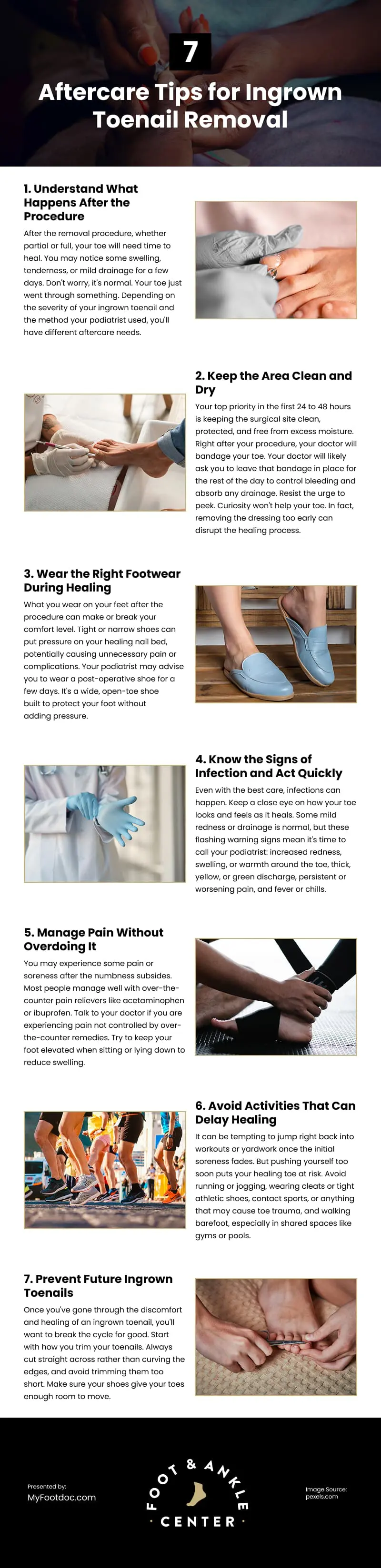
Infographic
Having an ingrown toenail removed brings immediate relief, but proper aftercare is crucial to keep that relief lasting. Explore this infographic to learn seven essential aftercare tips for ingrown toenail removal.