
If you’ve ever noticed your second or third toe starting to curl upward at the joint like it’s trying to wave hello on its own, or if you’ve seen the same thing happen to your parents or grandparents, you might be asking yourself a critical question: “Does hammertoe run in the family?”
The short answer is: Yes, it might. But like most things in life, there’s more to the story.
Understanding how hammertoe develops, and whether your family history plays a role, gives you a head start on hammer toe correction. Let’s break down what causes hammertoe, how heredity factors in, and what you can do to stay a step ahead.
What Is Hammertoe?
Hammertoe is a condition where one or more of your toes (usually the second, third, or fourth) become bent at the middle joint. Instead of lying flat, the affected toe points downward, creating a hammer-like shape. Over time, this misalignment can become stiff or rigid, leading to pain, difficulty walking, corns, calluses, and trouble fitting into shoes.
At first, the joint may still be flexible, meaning you can manually straighten the toe. But without early intervention, the toe can become permanently fixed in its bent position, like it’s stuck in curl mode. At that point, straightening the toe may require more invasive treatment, including surgery.
Is Hammertoe Caused by Genetics?
Genetics can set the stage for hammertoe, especially if certain structural traits run in your family. If your parents or grandparents have hammertoe, bunions, or flat feet, you may be more likely to develop foot conditions, including hammertoe, over time.
But it’s not the deformity you inherit; it’s the structure of your feet. In other words, you don’t get Grandma’s hammertoe, you just get her foot shape. You might inherit:
- A flat arch or high arch, which can affect toe alignment
- Instability in the toe joints, making them more susceptible to muscle imbalance
- A long second toe, which can lead to crowding in shoes and abnormal toe pressure
So while hammertoe isn’t passed down directly like eye color or hair type, the “blueprint” predisposing you to it certainly can be. Nature hands you the plans, but how you use your feet determines the final design.
Lifestyle Matters Too
Even if hammertoe runs in your family, you are not guaranteed to get it. Your daily habits, especially the shoes you wear and how much pressure you put on your feet, can prevent or accelerate the problem.
One of the biggest culprits? Tight, narrow shoes, particularly those with pointed toes or high heels. These styles can turn your toes into sardines in a can, squeezing them into unnatural positions, forcing them to bend, and increasing muscle strain in your feet.
Over time, this can lead to an imbalance between the muscles that pull your toe upward and those that pull it downward. The result? A toe that becomes stuck in a bent position, especially if heredity has already given it a wobbly foundation.
Who’s Most at Risk for Hammertoe?
While heredity is a significant factor, you’re more likely to develop hammertoe if you:
- Are female, as women tend to wear tight, high-heeled shoes more frequently
- Have diabetes or arthritis, which can affect nerves and joints in the feet
- Have poor circulation, leading to muscle weakness or atrophy
- Have previously injured your toe, which can alter alignment and function
In other words, if your feet have taken a few hits, they might rebel. These risks compound when combined with family history, so being proactive matters. If you know you have relatives with foot problems, especially hammertoe or bunions, it’s time to keep your eyes open. Pay closer attention to your foot health, even if you’re not experiencing symptoms yet. As they say, a stitch in time saves nine.
Signs You May Be Developing Hammertoe
Early detection is key. The earlier you catch hammertoe, the more likely you can manage it non-surgically. It’s like stopping a small wrinkle in your shirt before it turns into a permanent crease you’ll have to iron out. Keep an eye out for:
- Toes that are beginning to curl downward
- Discomfort when wearing shoes, especially in the toe box
- Corns or calluses forming on the tops or tips of toes
- Redness or swelling around the toe joints
- A feeling of tightness or cramping in the toes
If you notice these signs, don’t wait for it to worsen. Your toes won’t straighten out on good intentions alone. The sooner you intervene, the easier it is to avoid long-term complications.
How to Lower Your Risk of Hammertoe (Even If It Runs in the Family)
You may not be able to control your genetics, but you can try to outsmart them by taking control of your habits. Here’s how to lower your risk of developing or worsening hammertoe:
- Choose shoes with a roomy toe box and good arch support. Your toes should lie flat without being crowded.
- Avoid high heels for everyday wear. If you must wear them, limit the height and duration.
- Use custom orthotics if you have flat feet or biomechanical issues. These inserts help realign your foot structure.
- Stretch and strengthen your toes regularly. Simple exercises like towel curls or marble pickups can improve toe flexibility and muscle balance.
Pay attention to pain and discomfort. Your feet are great communicators. When they hurt, they’re not being dramatic but sending a message. Pain is not “normal” in your feet. It’s a sign that something needs attention.
When Should You See a Podiatrist?
If your toe starts to bend noticeably, becomes painful, or limits your ability to walk comfortably, seek help. A flexible hammertoe can progress if left untreated. A podiatrist can evaluate the condition, assess your risk factors, and recommend a custom treatment plan that may include physical therapy, orthotics, or surgical correction, if necessary.
The Sole Truth
So, is hammertoe hereditary? Yes, but that’s only part of the equation. Your genes may give you certain foot characteristics, but your footwear choices, lifestyle habits, and willingness to intervene early decide whether your toes stay in line or go rogue.
Don’t wait for your toes to start sending distress signals. If you’re concerned about your foot structure or have a family history of foot deformities, now is the perfect time to take proactive action. As your foot & ankle specialists of Nevada, we’re here to guide you toward healthier steps and pain free feet.
Video

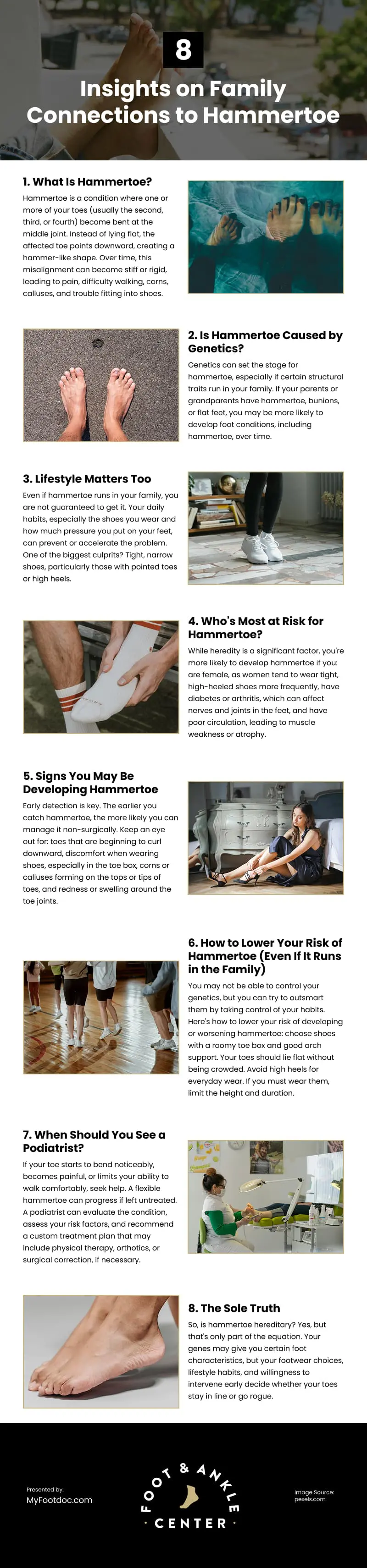
Infographic
Understanding the development of hammertoe and the role of family history can give you a head start in correcting this condition. This infographic explores the causes of hammertoe, the influence of hereditary factors, and offers tips on how to prevent it.