
It’s not right when every step feels like you’re walking on broken glass; something deeper is definitely going on.
If your foot is constantly sore, swollen, or tender in a specific area, you could be dealing with foot bursitis. This condition may sound small, but foot pain can disrupt your daily life in a big way.
The first step to healing is understanding what’s happening inside your foot and how to handle it.
What Is Foot Bursitis?
Foot bursitis occurs when the small fluid-filled sacs called bursae become inflamed.
These bursae act like cushions between your bones and soft tissues in your foot, reducing friction and absorbing shock. When they’re irritated or overused, they swell and become painful.
In your feet, bursitis usually appears in one of three key locations. They can be under the heel, near the big toe, or around the base of your fifth toe. Each type of bursitis creates its own unique discomfort, but the underlying issue remains the same—inflammation.
Left untreated, bursitis can progress from annoying to debilitating, especially if it affects your ability to walk.
Common Symptoms You’ll Notice
You might first notice bursitis when a part of your foot starts feeling unusually tender or swollen. Over time, that discomfort can turn into pain that flares up when you walk or stand.
The most common signs of bursitis are localized pain that worsens with activity, swelling and warmth in the affected area, redness or tenderness, difficulty wearing tight shoes or high heels, and stiffness or aching that doesn’t improve with rest.
Sometimes, bursitis can feel like plantar fasciitis or even a stress fracture, but its pain is usually more concentrated. And specific areas may be more sensitive to pressure.
What Causes Foot Bursitis in the First Place?
Bursitis typically does not occur without warning. It’s often the result of a combination of causes.
Improper footwear can be a significant contributing factor, particularly if you wear shoes that lack proper support or have narrow toe boxes, as these create constant pressure on the bursae.
Another common cause of bursitis is overuse injuries. This is most common in road runners or dancers due to the repetitive motion from running or dancing on a hard surface, which can be particularly aggravating for the foot structures. Even non-athletes can suffer from overuse injuries, especially if you have a job that involves being on your feet all day.
You might also experience bursitis pain as a secondary problem to existing foot deformities. Conditions like bunions, hammertoes, and flat feet will all shift pressure onto vulnerable areas. Other medical conditions can also make your bursae more sensitive to flare-ups, particularly inflammatory conditions such as rheumatoid arthritis or gout.
How Bursitis Impacts Daily Life
When your foot hurts, you instinctively shift your weight to avoid the pain. That might work temporarily, but it can lead to new problems.
You may develop issues in your knees, hips, or back due to altered posture or gait. Even something as simple as walking to your car or climbing stairs can become a challenge when bursitis flares up.
Ignoring the symptoms may also lead to chronic inflammation or permanent damage to the bursa. That’s why you should take action early and treat the condition with care.
Treatment Options to Ease Your Pain
The good news is that most cases of foot bursitis can be treated non-surgically, allowing the bursa to heal naturally.
Some strategies that you can start right away include:
- Resting to give your foot a break
- Applying ice for 15-20 minutes to reduce swelling
- Switching to shoes with a wide toe box and arch support
- Taking over-the-counter medication to manage pain and reduce swelling
- Stretching and strengthening exercises to help ease foot strain
Don’t jump back into normal activities too quickly. Even when the pain fades, your bursa may still be healing, and re-aggravation is common if you don’t ease back into movement.
Prevention Tips to Avoid Future Flare-Ups
Once you’ve experienced bursitis, you’ll want to take every precaution to prevent it from recurring. The good news is that small daily changes can make a big difference.
- Avoid wearing unsupportive shoes, such as flats or high heels, for extended periods.
- Consider adding gel pads or orthotics if you notice spots on your foot taking extra pressure.
- Incorporate foot mobility and strength exercises into your routine. Activities like toe stretches, towel scrunches, and ankle rolls can help significantly.
- Stay aware of your posture, especially when standing for long periods.
- If you notice pain creeping in, don’t be a martyr and push through it. Be sure to take breaks, apply ice to the area, and allow yourself time to recover.
When to See a Foot Specialist
If your pain lingers for more than a few days despite rest, or if the swelling and redness worsen, it’s time to get expert help from your Nevada foot and ankle doctor.
A podiatrist can pinpoint the exact location and severity of the bursitis and rule out other conditions, such as infections or stress fractures.
Treatment might involve diagnostic imaging and hands-on evaluation. You may also benefit from learning more about how your gait contributes to recurring issues.
Catching bursitis early and treating it with the right plan can save you months of frustration and keep you mobile.
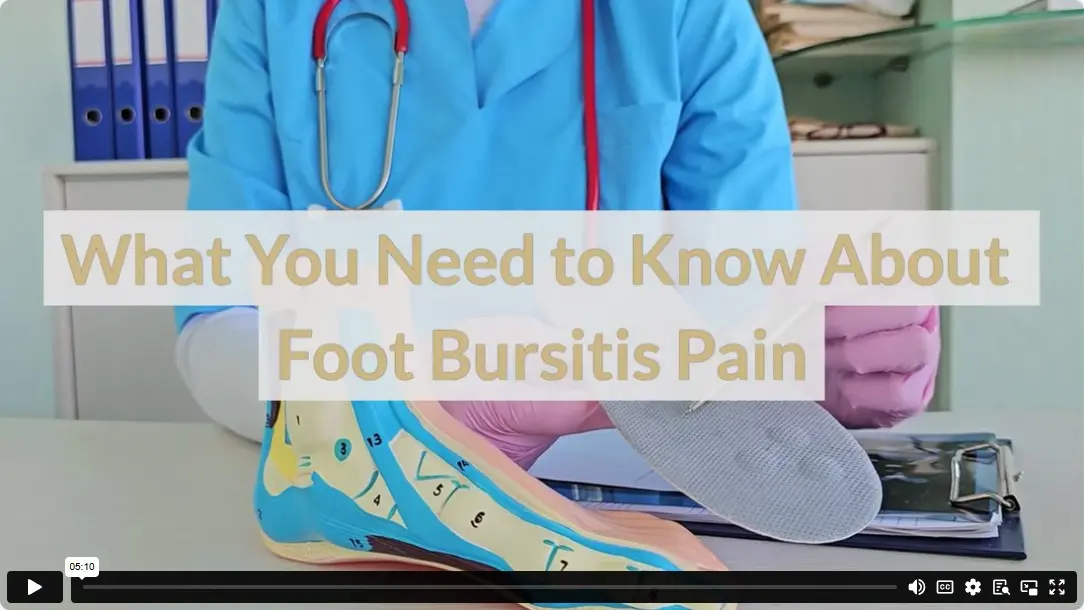
Video
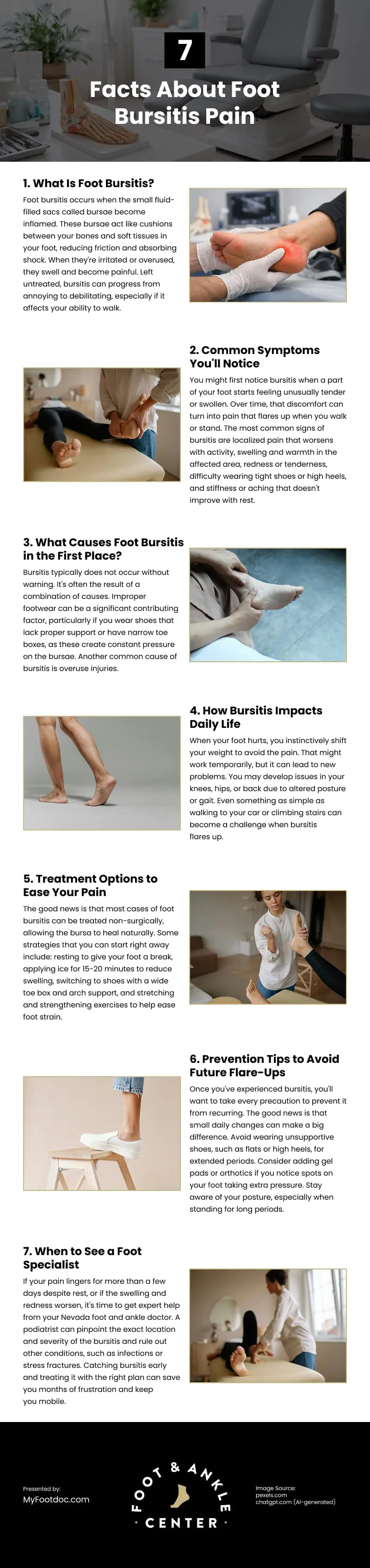
Infographic
Persistent soreness, swelling, or tenderness in a specific area of your foot may indicate foot bursitis. This condition occurs due to inflammation of the small fluid-filled sacs that cushion your bones and soft tissues. Continue reading to discover more facts about foot bursitis pain in this infographic.