
Bunion pain has a way of getting louder as the day slows.
You finally lie down, the room is quiet, but then that throbbing pressure near your big toe starts screaming for attention.
If you have trouble sleeping because of foot pain from your bunion, you are far from alone. Nighttime bunion pain often builds after a day’s worth of walking and standing. And if you wear the wrong shoes, that can irritate the joint, too.
You don’t have to lay awake listening to your foot complain, though. You can make your evenings easier with a few simple habits to calm inflammation, reduce pressure on the joint, and give your foot a chance to settle before you try to sleep.
Why Bunion Pain Often Feels Worse at Night
Your bunion has already put in a full day by bedtime.
Even if you were not especially active, your feet spent hours supporting your weight and adapting to the shape of your shoes. That stress is enough to make the joint swollen and sensitive by evening.
Pain also feels more noticeable at night because you finally stop moving. During the day, your mind stays busy, occupied by what you need to get done.
But at night, you have fewer distractions. As your brain quiets down, you may start to notice how your body feels. A sore bunion can be more noticeable when you are still, especially if the sheets brush against it or your foot rests in an awkward position.
For some people, warmth under the covers adds to the discomfort. A bunion that already feels inflamed may throb more once your foot heats up.
While there is no quick fix or cure for bunion pain, simple habits like a short wind-down routine can go a long way in reducing pain at night.
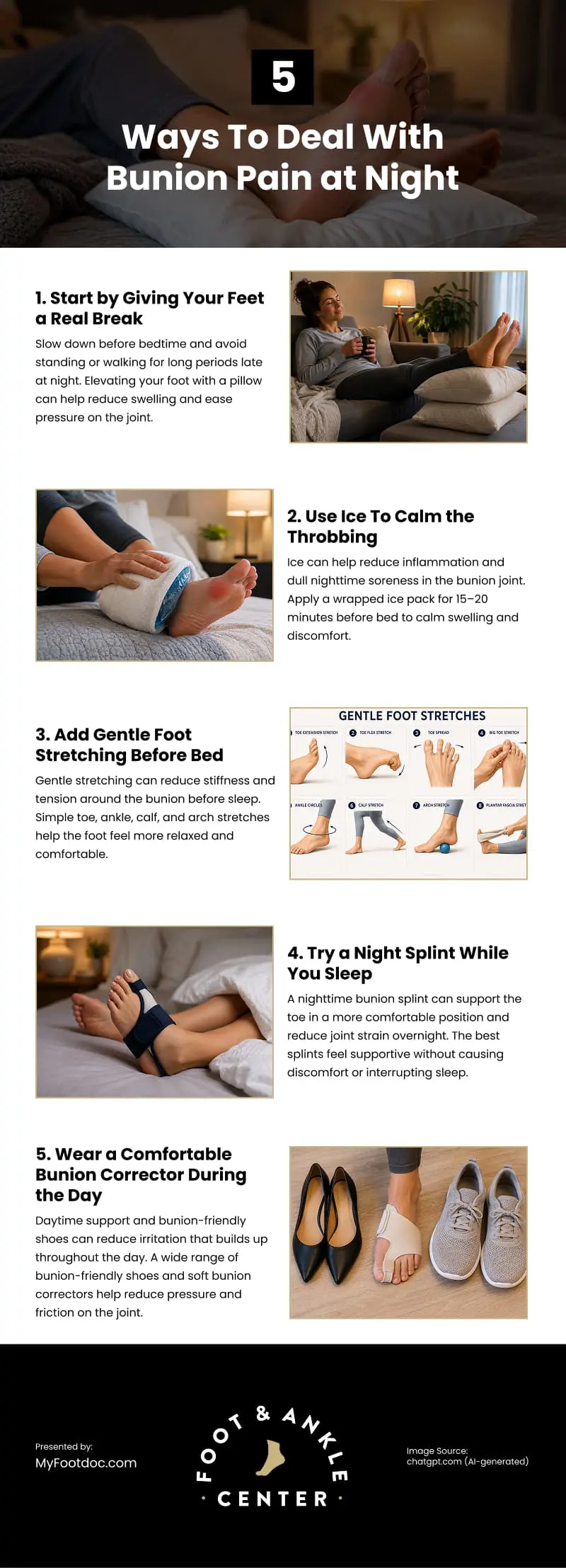
1. Start by Giving Your Feet a Real Break
One of the best things you can do at night is slow down.
Try to avoid late night errands, working around the house, or standing in the kitchen for extended periods right before bed.
Sit down and let your feet recover for a while before you turn in. A brief period of rest can lower joint pressure and allow the area to rest. If you must stay on your feet until the last minute, try shifting your routine by 20 or 30 minutes to create a respite.
Elevate your foot while you relax. Placing a pillow under your foot or lower leg can reduce some swelling and ease that heavy, achy feeling. This works particularly well if your bunion pain is accompanied by visible redness or puffiness.
2. Use Ice To Calm the Throbbing
If your bunion feels hot, swollen, or sharp at night, ice is often one of the fastest ways to settle it down. Cold can help reduce inflammation and dull soreness enough to make falling asleep easier.
Wrap an ice pack or a bag of frozen peas in a thin towel and place it over the bunion for about 15 to 20 minutes. Do this before bed, while sitting or reclining. Keep the cold source away from bare skin to avoid irritation.
You do not need to overdo it. A short session is often enough. Think of it as pressing reset on the joint after a long day.
If you know your bunion always flares at night, keeping an ice pack ready in the freezer makes the routine easier to stick with.
3. Add Gentle Foot Stretching Before Bed
A stiff foot tends to hurt more. Gentle stretching at night can loosen the muscles and soft tissues around the bunion, helping your foot feel more relaxed when you lie down.
Keep your stretches simple and controlled. Gently guide your big toe toward a more neutral position and hold for 10–15 seconds without forcing it. Slowly roll your ankle in each direction, then stretch your calf using a wall or a towel around your foot.
You can also lightly spread your toes apart or roll the bottom of your foot over a ball to release built-up tension. These small movements help reduce stiffness in the arch and forefoot after a long day.
A good bedtime routine should feel calming, not intense. The goal isn’t to correct the bunion, but to reduce tension and improve comfort. If anything causes sharp pain, stop and ease off.
4. Try a Night Splint While You Sleep
Some people get relief from using a splint at night. A bunion splint helps hold the toe in a more supported position while you rest. It does not get rid of the bunion, but it can reduce strain and discomfort of the joint due to the cramped position.
A splint can be especially helpful if your big toe feels crowded against the second toe or if the joint aches after wearing shoes all day. A nighttime splint gives the area a break from that pressure. Many people find that their foot feels more at ease in the morning after sleeping with one.
Comfort matters here. A splint should feel supportive, not aggressive. If it digs into your skin or makes it harder to sleep, it may be too stiff or poorly fitted. The best nighttime support is the kind you are comfortable with for several hours.
You can get generic bunion splints over the counter from most pharmacies, or you can look at getting a higher-quality, bespoke splint from your local foot pain specialist.
5. Wear a Comfortable Bunion Corrector During the Day
Nighttime relief doesn’t have to start at bedtime; your choices early in the day can make a big difference to your evening comfort.
If you spend the whole day irritating the bunion, you are more likely to feel it when your head hits the pillow. Wearing a comfortable bunion corrector during the day can reduce friction and help control pressure while walking.
However, if you wear a bulky device that crowds your shoe, you may simply trade one problem for another. Look for something soft and supportive that helps cushion the area without adding extra friction.
Your shoes matter just as much. A wide toe box provides space for the bunion and prevents the big toe from being pushed inward. If your daytime shoes squeeze the joint, the bunion corrector has to fight an uphill battle.
You can get a wide range of bunion-friendly shoes that are still comfortable and supportive. From summer sandals to simple sneakers to stylish smart shoes, there are many choices out there that give your feet the space they need without leaving you feeling like you have to wear something boxy or unfashionable.
Bonus Tip: Build a Bedtime Routine That Your Feet Can Rely On
A consistent routine is what will help your bunion pain the most. You do not need a complicated plan. You need a few steps that work together and fit easily into your evening.
For example, you might spend 15 minutes off your feet after dinner, ice the bunion while you read, do a few gentle stretches, and then put on a night splint before bed. That kind of routine is realistic, and realistic routines tend to last.
If your pain keeps waking you up or becomes harder to manage with home care, it is worth getting the bunion evaluated. Ongoing pain can point to worsening joint irritation or changes in how your foot is functioning.
A bunion may feel most frustrating at night, but you still have options. Give your feet a break, cool the joint, stretch gently, and support the toe to reduce pressure.
Video
Infographic
That nagging bunion pain has a sneaky way of flaring up right when you finally settle in for the night. Discover five simple evening habits that can calm sore joints and help you rest in the infographic below.