
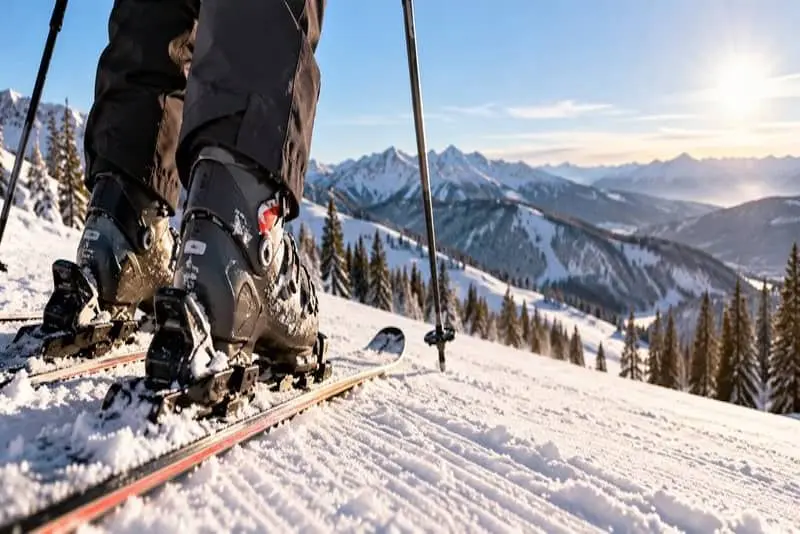
Utah is home to some of the greatest snow on earth. Its light, dry powder attracts everyone from first-time skiers and families to seasoned professionals.
But enjoying that snow means exposing your feet to challenging conditions they don’t typically encounter. Ski boots hold your feet and ankles in a fixed position while every turn, stop and change in terrain puts pressure on them. Cold temperatures can make that strain harder on your feet and ankles, increasing the risk of foot and ankle pain or injury.
Cold Temperatures Stiffen Your Feet and Ankles
Cold temperatures narrow the blood vessels in your extremities, and your feet are often some of the first areas to feel the drop in circulation. Less blood flow means less flexibility, and stiff tissue doesn’t stretch or absorb shock as well as warm tissue does.
Your calves and Achilles tendons can feel this effect first. A tight Achilles tendon puts more force through your heel and arch with every push-off, turn, and landing.
On a normal day, your body may handle that extra load without a problem. After hours in cold, dry mountain air, that added stress can become harder for your feet and ankles to handle.
Ski Boots and Quick Turns Add Extra Stress
Skiers know that sensation of strapping into a ski boot all too well. Clipped in tight, leaning slightly forward, and feeling like it’s just marginally more comfortable than locking your foot and ankle into a vice.
Ski boots are designed to lock your ankle in place so you can control your skis. That same design also reduces your ankle’s natural ability to flex and absorb impact. When your ankle can’t move the way it normally does, your arches, heels, and toes have to pick up the slack.
Quick turns and uneven terrain make that even harder. Every sudden change in direction sends force through your foot, and a stiff, cold ankle has fewer ways to spread that force around. Instead, that force is concentrated in certain spots, often at the arch or the base of the heel, which is where many ski-season injuries begin.
Buckle pressure adds another problem. Boots that fit too tightly around the midfoot can restrict circulation even more, while boots that fit too loosely let your foot slide around. Either way, your foot has to work harder to stay stable inside a boot that isn’t helping it much.
Utah’s High Altitude Increases Demand
At higher elevations, the air contains less oxygen, and your body has to work harder to meet the demands of physical activity. During a full day of skiing, fatigue can set in sooner than expected. And as your legs tire, maintaining good balance and control can become more difficult, which can increase the stress placed on your feet and ankles.
None of this means you have to sit out a powder day. But the demands of skiing are easier to handle when your body is prepared for them. Building strength in your legs, ankles and core before ski season, along with a short warm-up before your first run, can help prepare your body for the cold, altitude and physical demands of a day on the mountain.
Cold Dulls Your Warning System
Cold weather stiffens your tissue, but it can also numb the feeling in your feet.
So you might not feel the aches and twinges that would normally tell you to take everything a little bit slower until later in the day. Many skiers don’t realize they’re dealing with a strain or small stress fracture until they pull their boots off. The pain really sets in when their feet start to warm back up.
This delayed feedback helps explain why injuries during ski season can feel like they came out of nowhere. In reality, the injury may have happened over several runs, while your feet were too cold to alert you to the problem.
Common Foot and Ankle Injuries During Ski Season
The most common problems range from sudden ankle injuries to pain that develops slowly over days on the slopes.
Ankle Sprains
An ankle sprain occurs when the ligaments that support the ankle are stretched or torn, usually after the foot rolls or twists unexpectedly. Skiing on uneven terrain, catching an edge or landing awkwardly can put the ankle in a vulnerable position, particularly when fatigue makes it harder to maintain control.
Achilles Tendon Pain
The Achilles tendon connects the calf muscles to the heel and plays an important role in pushing off and controlling movement. Tight or fatigued calf muscles can increase the workload on the tendon, while the fixed position of a ski boot can change how the ankle and lower leg move. Pain and stiffness along the back of the heel or lower calf may be signs that the tendon is being overloaded.
Stress Fractures
Stress fractures are small cracks in a bone that develop from repeated loading rather than a single traumatic event. The repetitive impact of skiing, combined with increased activity at the beginning of the season or a sudden increase in time on the slopes, can contribute to these injuries. Pain often develops gradually and may become more noticeable during activity or persist even after skiing.
Plantar Fasciitis
Plantar fasciitis involves irritation of the plantar fascia, a band of tissue that runs along the bottom of the foot, supporting the arch. Spending hours in ski boots can place sustained pressure on the feet, while repeated turns and changes in terrain add to the workload. Pain is often felt along the bottom of the heel or arch and may be especially noticeable with the first steps after rest.
These problems don’t always appear after one dramatic fall or hard landing, making it important to pay attention to persistent pain rather than simply skiing through it.
Warming Up and Gear Choices That Protect Your Feet
A proper warm-up before you clip into your skis can make a big difference in cold weather. A few minutes of calf raises, ankle circles, and gentle stretching get blood flowing through your lower legs and give your tendons the flexibility they need before you put them to work.
Your gear plays just as big a role. Ski boots that fit properly, without pinching your toes or leaving extra room around your heel, keep your foot stable instead of letting it slide and strain with every turn.
Custom orthotics can help, too, especially if you have flat feet or high arches. By supporting the arch and helping distribute pressure more evenly across the foot, orthotics can reduce areas of concentrated stress inside a rigid ski boot.
Your socks make a difference, too. Thin, moisture-wicking socks keep your feet dry without adding bulk that affects your boot fit, which helps preserve whatever range of motion your ankle already has. Wearing thick socks or two pairs can make your boots fit too tightly, creating pressure points and restricting circulation rather than keeping your feet warmer.
A short mid-day reset can help as well. When you stop for lunch, step out of your boots, wiggle your toes, and slowly roll your ankles in circles. This gives your feet a few minutes to restore blood flow before you head back out for the afternoon runs..
Recovering After a Ski Day
What you do after skiing matters almost as much as how you warm up beforehand. A short warm-down can be equally helpful in reducing the risk of injuries and muscle aches from your day on the slopes.
Elevate your feet for a few minutes when you finish for the day. This helps reduce the swelling that builds up after hours of standing and absorbing impact inside a rigid boot. A brief session of gentle stretching, especially for your calves and Achilles tendon, can help prevent the tissue from tightening further overnight and waking you with shooting cramps.
Sharp or localized pain, unlike general fatigue that usually fades with rest, calls for a day off from intense running and doing a less intense one. Skiers who push through that kind of pain can easily turn a minor strain into a stress fracture. So skip the slopes and treat yourself to a day of self-care and relaxation.
When Foot Pain Sticks Around After a Day on the Slopes
A little soreness after a long day of skiing is normal. But pain that hangs around for several days, swelling that does not go down, or a specific spot that hurts every time you put weight on are usually signs that something is wrong.
Foot pain that follows you home from the mountain is worth getting checked out. If it does not improve with rest, search “Utah foot doctor” and schedule a visit with a podiatrist. Getting your concerns checked out quickly makes it easier to choose the right treatment and avoid turning a minor problem into something that keeps you.
Infographic
