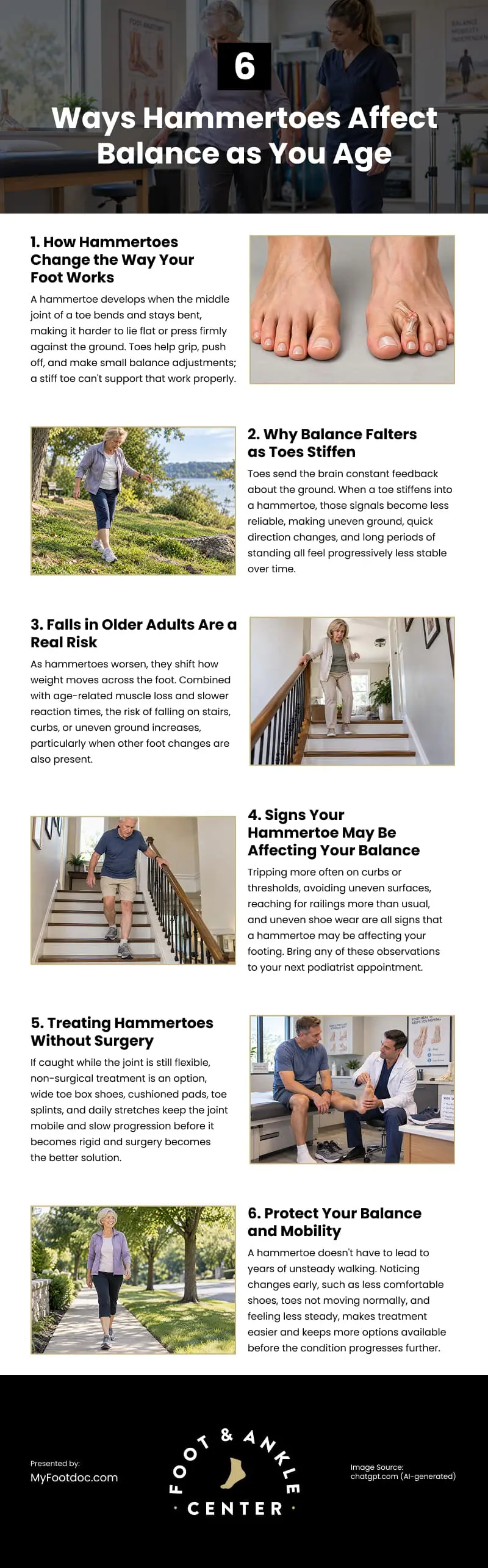

You probably don’t think about your toes most days. You step out of bed, walk across the kitchen, climb stairs, and turn quickly to change direction without giving them a second thought. That is because healthy toes quietly help your feet stay stable and balanced with every movement.
But when a hammertoe develops, that small change can begin to affect the way your foot works. A toe that no longer sits flat or moves normally can change how pressure is distributed across your foot, sometimes making everyday movements feel less comfortable or less steady.
Because hammertoes often develop slowly, the early changes can be easy to miss. The reason a small change in one toe can have a bigger impact comes down to how much your toes actually do with every step. A foot and ankle specialist can evaluate these changes, identify what may be contributing to your symptoms, and recommend treatment options based on your specific condition.
How Hammertoes Change the Way Your Foot Works
A hammertoe develops when the middle joint of a toe bends and stays that way, causing the toe to curl downward instead of lying flat. Over time, the joint becomes stiff, making it harder to straighten the toe on your own. They’re called hammertoes because the bent toe can resemble the head and claw of a classic hammer.
The name and look of a hammertoe may make it seem like a small cosmetic problem, but your toes do a lot of work when you walk. They help you grip the ground, push off with each step, and make small adjustments that keep you balanced. When a toe can’t lie flat or press firmly against the ground, you lose some of that stability.
Hammertoes usually develop gradually over several years. Tight, narrow shoes are one of the most common causes because they keep your toes bent long enough for the joint to change shape. Muscle imbalances in the foot, past toe injuries, and conditions like arthritis can also contribute. Regardless of the cause, a toe that no longer moves the way it should cannot support your foot properly.
Why Balance Falters as Toes Stiffen
Your balance depends on more than your inner ear or strong legs. Your feet constantly send signals to your brain about the ground beneath you, and your toes play a big part in that process. When your toes become stiff from a hammertoe, they send less feedback and can’t adjust as well to uneven or changing surfaces.
Think of your toes as tiny sensors that constantly tell your brain what’s happening under your feet so the rest of your body can respond. When a toe stiffens into a hammertoe, those signals become less reliable, giving your brain less information to help you stay balanced.
You may notice the difference most when you’re:
- Walking on uneven ground. Grass, gravel, and sloped sidewalks require your toes to grip and adjust, something a hammertoe has a harder time doing.
- Turning or changing direction quickly. Pivoting puts extra pressure on your toes for a moment, and a stiff toe can make those movements feel less stable.
- Standing for long periods. Without full contact from your toes, your weight shifts unevenly across your foot, which can leave you feeling tired or unsteady.
These changes don’t happen overnight. They develop gradually, which is one reason hammertoes are easy to ignore until they start affecting your balance.
Falls in Older Adults are a Real Risk
For older adults, even small balance changes can have significant consequences. A stumble that a younger person quickly recovers from can lead to a serious fall for someone in their sixties, seventies, or older.
As hammertoes become more severe, they can change how your weight moves across your foot with every step. When you combine that with the natural loss of muscle strength and slower reaction times that come with age, your risk of falling can increase, especially on stairs, curbs, or uneven ground.
The good news is that hammertoes rarely cause falls on their own. They’re usually one piece of the puzzle. Other age-related foot changes, such as thinning fat pads on the bottoms of your feet or reduced feeling from conditions like diabetes, can make the problem worse.
That’s why podiatrists look at your entire foot, not just the affected toe, when they evaluate your balance and fall risk.
Signs Your Hammertoe May Be Affecting Your Balance
Even small changes in the way your toes function can affect your footing over time. Some signs that a hammertoe may be influencing your balance include:
- Tripping or stumbling more often, especially on curbs, door thresholds, or uneven sidewalks.
- Avoiding surfaces like grass or gravel because they make you feel less steady.
- Reaching for railings or furniture more often than you used to, even in places you know well.
- Uneven wear on the bottoms of your shoes can be a sign that you’re shifting weight away from a stiff toe.
If any of these sound familiar, bring them up with your podiatrist at your next appointment.
Treating Hammertoes Without Surgery
A common question podiatrists hear is, “Can hammertoes be fixed without surgery?” The answer is often yes. Many people assume a hammertoe needs surgery, but that’s usually not where treatment begins.
If you catch a hammertoe early, while the joint is still flexible, non-surgical treatment is an option. Your podiatrist may recommend:
- Supportive shoes with a wide toe box that give your toes room instead of squeezing them into a bent position.
- Cushioned pads or toe splints to reduce pressure and help keep the toe in a straighter position.
- Simple stretches and exercises you can do each day to keep the joint flexible and slow the progression.
These treatments are often prescribed when the toe is still flexible. Once a hammertoe turns rigid, non-surgical options usually provide less relief, and surgery may be the better solution. That’s why it’s important to address the problem early, especially if you’ve started noticing changes in your balance.
Good foot care also goes a long way. Trimming calluses, checking your feet for pressure points, and replacing worn-out or narrow shoes can all help slow the progression of a hammertoe.
Protect Your Balance and Mobility
A hammertoe doesn’t have to lead to years of unsteady walking. With early treatment, many people can maintain their balance and stay active for years to come.
The key is to pay attention to changes before they become bigger problems. If your balance feels off, your shoes feel less comfortable, or your toes aren’t moving the way they used to, it’s worth having them checked. Small changes are often easier to address than long-standing ones.
If you’ve noticed you’re feeling less steady on your feet, don’t ignore it; make an appointment with your local St. George foot doctor. Your toes play a bigger role than you realize, and finding the cause of pain early can help you stay comfortably on your feet.
Video

Infographic