
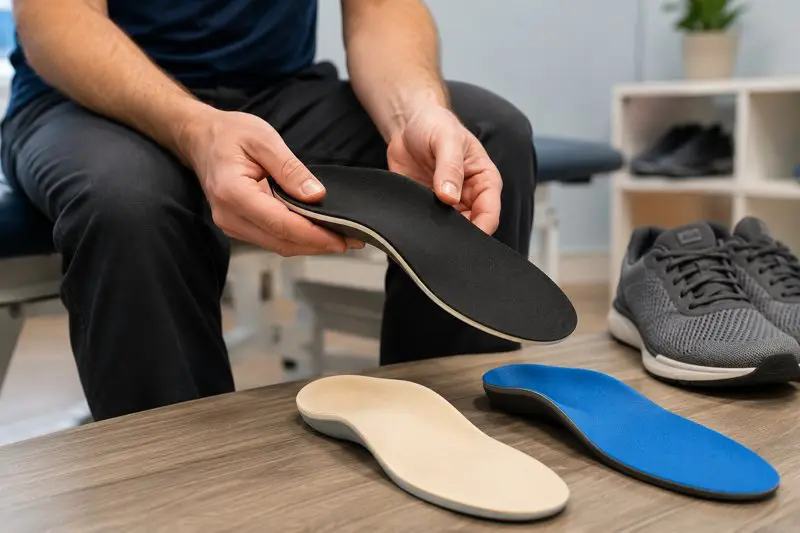
When you invest in a set of custom orthotics, you’re giving your feet support that’s specifically tailored for you, not a generic “one size fits all” insert picked up off a store shelf.
That personalized fit is what makes custom orthotics one of the most effective non-surgical treatments for many foot and ankle conditions. But like anything you use every day, they don’t last forever.
Much like a favorite pair of running shoes, even the highest-quality custom orthotics wear down and gradually lose their effectiveness. Continuing to use them can slowly allow your foot discomfort to return.
Knowing how long your orthotics should last and recognizing when they’re no longer doing their job helps keep your feet properly supported and comfortable.
How Long Custom Orthotics Typically Last
Most custom orthotics last between one and five years, but how long they hold up depends on several factors, including how often you wear them, your activity level, and what they’re made from.
Rigid orthotics, commonly used to treat plantar fasciitis and other chronic foot and ankle conditions, are usually made from carbon fiber or hard plastic. They are built to handle repeated pressure and typically last longer than softer options.
Soft orthotics are made from foam or gel, provide excellent comfort and shock absorption, but wear out more quickly. They’re a bit like a memory foam pillow after a few years. It still looks fine, but it doesn’t provide the same support it once did. However, they are often a good choice in diabetic foot care.
For most people with a moderately active lifestyle, it’s reasonable to expect custom orthotics to last about two to three years.
But orthotics wear down gradually, and you may not spot it at first. Arch support slowly loses its shape, cushioning becomes compressed over time, and your feet often adjust to the reduced support without you realizing it. By the time you notice discomfort, your orthotics probably stopped providing the support you need a while ago.
Your feet can change over time as well. Pregnancy, major weight changes, and the natural effects of aging can all affect the way your feet move and bear weight.
So, even if your orthotics still look like they’re in good condition, they may no longer fit or support your feet the way they were originally designed to.
What Makes Some Orthotics Wear Out Faster
Some people naturally put a lot more wear and tear on their orthotics than others.
If you are a runner or spend hours at a time on your feet as a construction worker, nurse, or warehouse employee, your orthotics are working much harder than they would for someone with a lower-impact routine.
In those cases, replacing them every one to two years is common and often recommended. Every step, landing, and push-off adds up over time, causing the materials to wear down faster than they would with occasional use.
Body weight also plays a role. Orthotics for heavier individuals absorb more force with every step, which can speed up compression and wear, especially in softer materials.
Using the same pair of orthotics in different types of shoes throughout the day, from running shoes to dress shoes to work boots, can also place uneven stress on them and shorten their lifespan.
The shoes you wear with your orthotics matter more than many people realize. A rigid orthotic performs best inside a supportive, well-structured shoe. Put that same orthotic into a soft or overly flexible shoe that doesn’t hold your heel securely, and it can shift, wear unevenly, or break down more quickly.
On the other hand, people with lower-impact lifestyles, such as retirees who enjoy daily walks or office workers managing a stable foot condition, may get closer to five years of use, especially if they wear rigid orthotics with the same supportive shoes on a regular basis.
How to Make Your Orthotics Last Longer
Getting the most out of your custom orthotics doesn’t require much extra work. Adopting a few simple habits can help them last longer and perform better.
Start by taking them out of your shoes at the end of each day. Letting them air out gives moisture a chance to evaporate, which helps slow the breakdown of cushioning materials. This is especially important for soft orthotics, since sweat and moisture can cause them to compress more quickly than many people realize.
It’s also a good idea to keep your orthotics away from extreme heat. Leaving them in a hot car during the summer can warp rigid shells or weaken the adhesives that hold different layers together. When you’re not wearing them, store them in a cool, dry place.
Clean your orthotics regularly, but be gentle. Avoid soaking them in water or putting them in the wash with your dirty clothes. Either option can damage the materials. Instead, wipe them down with a soft cloth dipped in mild, soapy water.
Finally, make sure you’re using your orthotics in the right shoes. They’re designed to fit shoes with specific depths, heel shapes, and levels of support. Trying to squeeze them into shoes where they don’t fit properly can put extra stress on both the orthotics and the shoes, causing both to wear out sooner.
Warning Signs Your Orthotics Are Worn Out
Your custom orthotics won’t come with an expiration date or a reminder telling you it’s time for a replacement. Instead, they give you signs that they’re no longer doing their job, and knowing what to look for can help you avoid unnecessary discomfort.
One of the biggest clues is the return of the symptoms your orthotics were meant to relieve. If heel pain, arch fatigue, or knee discomfort returns after being under control, worn-out orthotics could be part of the problem. When familiar aches return, it’s often your body’s way of telling you that the support your feet rely on has changed.
There are also a few physical signs to watch for:
- Visible cracks, splits, or thinning. A cracked rigid orthotic won’t provide the same level of support it once did because they can no longer distribute pressure the way they were designed to.
- Flattened cushioning. Over time, softer materials lose their ability to absorb shock. Press on the cushioning. If it feels flat, firm, or doesn’t bounce back like it used to, it’s probably worn out.
- New discomfort or movement inside your shoe. Orthotics should feel stable and almost unnoticeable. If they start shifting around, creating pressure points, or causing soreness in new areas, they may no longer fit or function properly.
It’s also worth paying attention to changes beyond your feet. New pain in your knees, hips, or lower back, or uneven wear on the soles of your shoes, can be signs that your orthotics are no longer properly aligning your gait.
Why Podiatry Check-Ins Matter
One of the best ways to keep your custom orthotics working properly is to stay on top of your regular podiatry appointments.
During those visits, your local podiatrist can evaluate the condition of your orthotics and compare them with the current shape and function of your feet, something that’s difficult to assess accurately on your own.
Sometimes that evaluation will shows your orthotics still have plenty of life left and only need a small adjustment. Other times, it catches wear before it starts affecting your gait.
As your orthotics lose support, your body naturally begins to compensate, often without you realizing it. Over time, those subtle changes in your gait can place extra stress on your knees, hips, and lower back, leading to new aches and pains before foot discomfort becomes obvious.
For most people, having their orthotics checked once a year is enough. If you’re very active or your feet have changed because of aging, pregnancy, or significant weight changes, more frequent evaluations may be helpful.
If your orthotics are more than two years old and haven’t been checked recently, it’s probably time to have them evaluated.
Keep Your Foundation Strong
Custom orthotics are an investment in your long-term foot health, and they perform best when you give them the attention they deserve.
Pay attention to how your feet and body feel, take note if familiar symptoms start to return, and don’t wait until you’re in significant foot pain before scheduling a visit with your podiatrist.
Your feet support you through every step of your day. Making sure your orthotics continue to provide the support they were designed to deliver is one of the simplest ways to keep your feet healthy, comfortable, and ready for your next step.