Athletes can spend a lot of time laser-focused on performance. You think about everything from nutrition, training plans, your recovery time, and finding the right shoes.
But the bottoms of your feet usually do not get much attention until something starts to bother you.
Plantar warts have a habit of showing up when you least expect them, and many of the same factors that help you compete can also make you more vulnerable to them. Knowing why they happen can help you avoid a painful issue that could slow you down.
What Makes a Plantar Wart Different From Other Warts
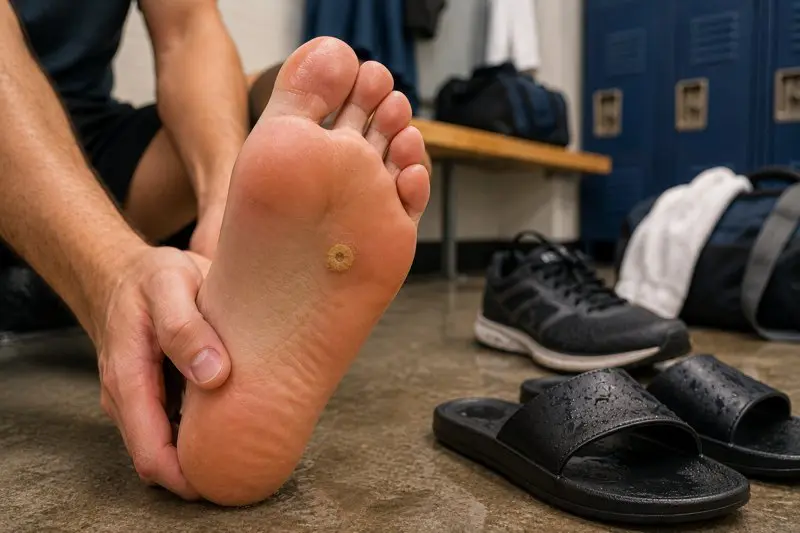
Plantar warts form on the bottoms of the feet, most often around the heel or the ball of the foot, where the most pressure is applied. They are caused by a viral infection called the human papillomavirus or HPV. Certain strains can enter the soles of your feet through cracks in the skin, infecting the soles of your feet.
What makes plantar warts different from warts on the hands or other parts of the body is the way they grow. Because your body weight presses down on them with every step, plantar warts are pushed inward instead of outward. That pressure is what makes them uncomfortable. Many people say it feels like walking on a small pebble that is stuck in their shoe, except the sensation gets worse the more they move.
Plantar warts often look rough and thickened, and some develop tiny black dots in the center. Those dots are actually small clotted blood vessels inside the wart, a sign that it has taken hold beneath the skin. Without treatment, plantar warts can spread across the sole or form clusters, which is why early treatment is so important.
Unlike some foot problems that make their presence obvious right away, plantar warts can be easy to overlook in the beginning. That is especially true for athletes, who are used to sore feet and often assume a little discomfort is simply part of training and competition.
Why Shared Athletic Spaces Put You at Higher Risk
HPV does not survive well on dry surfaces, but it thrives in warm, damp environments. Locker rooms, shared showers, pool decks, and gym changing areas all provide the perfect conditions for the virus. Athletes tend to spend more time in these spaces than most people do, and they often walk through them barefoot.
The virus spreads through contact with contaminated surfaces. You do not have to come into direct contact with someone who has a wart to pick it up. Simply walking across a locker room floor or using a communal shower without sandals can provide enough exposure. HPV only needs one opportunity to reach your skin.
Changing rooms and pool areas carry some of the highest risk because they combine constant moisture with heavy foot traffic. Even facilities that clean surfaces regularly can still harbor HPV, since the virus can survive on surfaces between users.
Swimmers, team-sport athletes, martial artists, and frequent gym-goers tend to develop plantar warts more often because they spend so much time in these environments.
Athletes have an increased risk of plantar warts because they come into contact with the virus more often. The more time you spend barefoot in shared spaces, the more opportunities HPV has to find its way into the skin.
How Athletic Activity Makes Your Feet More Vulnerable
Shared spaces are not the only reason athletes are more likely to develop plantar warts. The physical demands of sports can also create the perfect conditions for HPV to gain a foothold, so to speak, and much of it comes down to what your feet experience during training and competition.
HPV only needs a small opening or weak spot in the skin to get in, and athletic feet often provide exactly that. Heavy sweating during workouts can soften the skin on the soles, reducing its effectiveness as a protective barrier. Constant friction from cleats, running shoes, or court shoes can create tiny abrasions and small cracks that may not be noticeable but still give the virus a way in.
Athletes who spend a lot of time on artificial turf, hardwood courts, or concrete often experience more minor skin damage than those training on softer surfaces. The repeated impact and friction gradually wear down their skin’s defenses. Add in poorly ventilated shoes, long practices in hot weather, or slipping into socks and shoes after being in a shower, and the risk continues to build.
Your feet do a tremendous amount of work during sports, but that wear and tear can also weaken the natural barrier that helps keep viruses like HPV out.
How Plantar Warts Affect Training and Performance
A plantar wart that feels manageable on a rest day can become genuinely disruptive the moment you start training. High-impact movements, such as sprinting, jumping, cutting, and lateral pivoting, all drive additional pressure through the sole and directly into the wart. Because a plantar wart grows inward rather than outward, that pressure compresses the growth against deeper tissue and nerve endings, which is where the sharp or burning sensation comes from.
The pain tends to be most noticeable during activities with hard push-off or repeated foot strike. Distance runners often feel it build as mileage accumulates. Court sport athletes notice it during direction changes. The worse the wart, the more every step costs.
When a plantar wart becomes painful enough, athletes often unconsciously shift their stride or adjust their foot strike to offload pressure from the sore spot. That compensation changes how force travels through the foot, ankle, knee, and hip. A plantar wart that starts as a minor irritation can quietly contribute to joint stress or soft-tissue problems elsewhere in the leg when left unaddressed.
What to Do Before Your Next Practice
Preventing plantar warts really comes down to a few simple habits when you are in shared athletic spaces:
- Wear sandals or flip-flops in locker rooms, communal showers, pool decks, and gym changing areas.
- Make sure to dry your feet thoroughly after workouts, especially between the toes, where moisture tends to linger.
- Avoid sharing towels, socks, or footwear with teammates, even if it seems harmless.
- Take a quick look at the bottoms of your feet from time to time to catch any changes early, before a small rough patch becomes more noticeable.
- Replace worn-out athletic shoes once they start to break down and no longer support or protect your feet the way they should.
If you have already noticed a rough, tender, or thickened spot on the bottom of your foot, it is better not to ignore it. Plantar warts rarely go away quickly on their own and often spread or multiply when left untreated. The longer they are allowed to progress, the larger and more uncomfortable they usually become.
Keep Your Feet in the Game
Plantar warts are one of those foot problems athletes often try to push through until they no longer can. Taking precautions to protect your feet can go a long way in preventing them, and catching one early is usually much easier than dealing with it after it has been underfoot for an entire season.
A podiatrist in Nevada can help confirm whether what you are dealing with is actually a plantar wart, since other skin conditions can look very similar, and then recommend the most appropriate treatment based on the size and location. Treatment options may include cryotherapy (freezing the wart), prescription topical medications, or laser removal for more stubborn or long-standing cases. Searching for a “podiatrist near me” is a good place to start if you want to get it checked out sooner rather than later.
Video

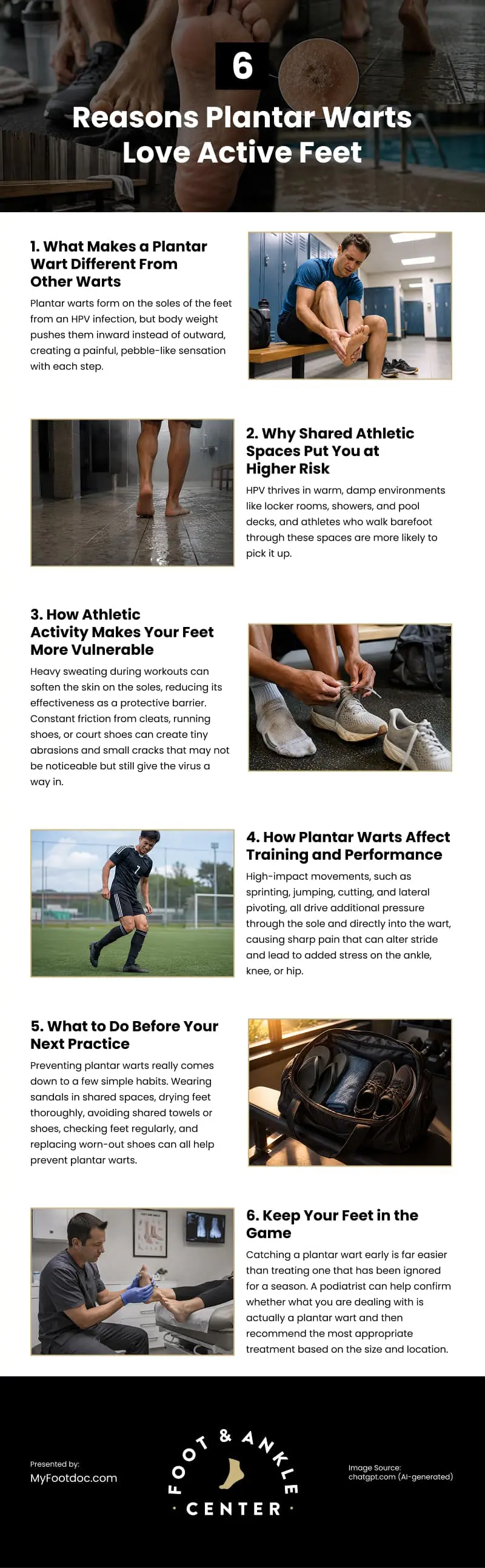
Infographic
Active feet are more prone to plantar warts than many athletes realize, and a few key factors are usually to blame. Explore reasons plantar warts love active feet in this infographic.