
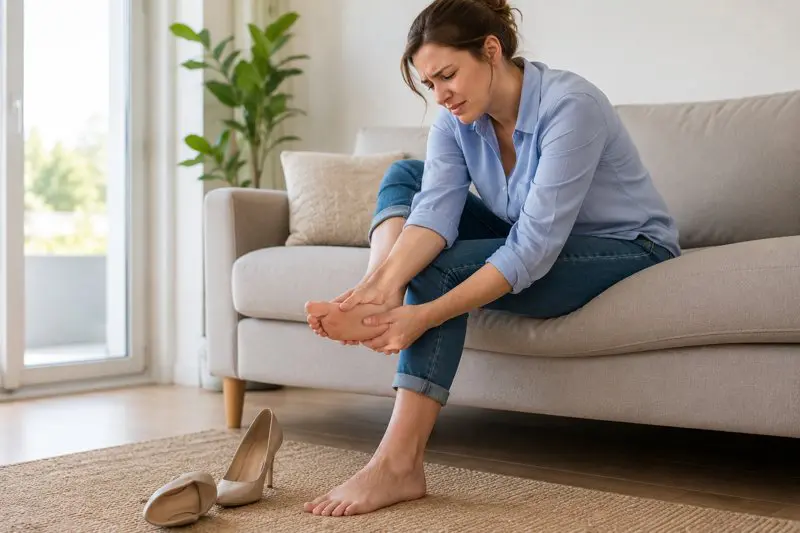
How many times, in a movie or TV show, have you seen a woman get home, take off her impractical, high-heeled, pointy-toed shoes, wince and rub her foot, sighing?
Heel pain in women is so commonplace that it makes a regular appearance in advertisements and entertainment. But it’s wrong to blame this pain on a woman’s impractical shoes.
Women experience heel pain for several reasons, many of which relate to daily life. Yes, footwear choices can play a part, but so does having a job where you are on your feet all day, pregnancy, weight fluctuations, and other preexisting foot conditions.
Foot pain can start quietly, then shape your whole day. You get out of bed and feel a sharp pull under your heel. You stand at work and notice that the ache builds hour by hour. You walk more carefully, shift your weight, and wonder why this keeps happening.
When you understand the possible causes, you have a better chance of reducing strain before heel pain becomes your constant unwelcome companion.
Standing for Long Hours Adds Up
A lot of heel pain starts with repeated stress. Women often work in roles that require long stretches of standing, even if those jobs do not look physically demanding from the outside. Teaching, nursing, retail, salon work, hospitality, and similar positions can keep you on your feet for most of the day.
That kind of routine puts steady pressure on the heel and the soft tissue around it, no matter what shoes you wear. The issue is not that you are standing. It is the number of hours you spend doing so. If your shoes offer poor support, the strain grows faster. If you work on hard surfaces like tile or concrete, the pressure grows even more.
You may notice your heel feels worst after work or that the pain increases over the course of the week. Your foot is telling you that the daily load has started to outpace recovery.
High Heels Change Create Pressure
High heels change your posture from the ground up. When you wear them often, your body shifts forward, placing more pressure on the ball of your foot. You’re walking on your tippy toes all day when you wear them. That constant pressure can contribute to a whole host of problems like bunions and neuromas, which are already more common in women.
At first glance, those issues seem quite far removed from heel pain, but they are not. When the front of your foot becomes irritated or unstable, your body’s mechanics change. You may start to shorten your stride, change how your foot lands, and notice your calf and arch muscles tighten. These adjustments are what can start to increase stress on your heel.
High heels can tighten the calf muscles and Achilles tendon over time, even if you don’t wear them all day, every day. Then, when you switch to flat shoes or go barefoot, the back of your leg and the bottom of your foot may pull harder on the heel. That is one reason some women develop persistent heel pain even when they are no longer wearing heels all day.
Bunions and Neuromas Can Shift the Way You Walk
Bunions are much more common in women than in men, affecting more than half of American women compared to about a quarter of men,1 and they often progress to the point where bunion surgery is considered.
Conditions like bunions and neuromas can also trigger a chain reaction in how your foot functions. A bunion changes how your big toe works during push-off when you walk, while a neuroma can make you avoid pressure on part of the forefoot. Once that happens, your gait begins to change.
You may start walking around the pain instead of through it. That compensation can move extra load into the heel, the arch, or the outer foot. Over time, your heel will likely become the area that absorbs the cost of that altered movement.
This helps explain why heel pain does not always begin at the heel. Sometimes the root problem starts elsewhere in the foot, and the heel is the part that finally complains loudly enough for you to notice.
Pregnancy-Related Changes May Increase Risk
Pregnancy changes foot mechanics in several ways. Weight gain increases the load your feet carry with every step. At the same time, hormones loosen ligaments in preparation for birth. Those looser ligaments can affect the structure of your feet, allowing more spreading or flattening over time.
That combination can increase pressure across the heel and arch. Some women notice heel pain for the first time during pregnancy. Others notice that their feet feel larger, flatter, or more tired by the end of the day. If the arch drops more than usual, the plantar fascia may take on extra strain, and that can lead to heel pain.
Pregnancy-related foot pain can often be managed at home, using a combination of conservative, non-surgical methods, including rest, icing, stretching calf muscles and arches, and wearing supportive footwear.
For some women, their foot pain improves after pregnancy. But for others, foot size and mechanics stay different. That is why heel pain that starts during pregnancy sometimes lingers well beyond delivery.
Weight Changes Can Put Extra Stress on the Heel
Extra body weight increases force through the foot with every step. The heel usually feels that quickly because it is one of the first major contact points during walking. If you are already dealing with tight calves, unsupportive shoes, or prolonged standing, the added load can accelerate irritation.
This does not mean every person with heel pain has the same cause. It means body weight is one of several factors that can increase the amount of stress on the heel each day. The more load your foot has to manage, the more important support and movement patterns become.
Even modest weight gain can make a difference if your tissues are already irritated. That is one reason heel pain often appears after a period of physical change.
The Most Common Pattern Women Notice
Many women describe a similar kind of heel pain. It is sharp with the first few steps in the morning. It improves once you get moving. Then it returns later after time spent standing, walking, or wearing a particular pair of shoes. That pattern often points to swelling or tightness in connective tissue, known as the plantar fascia, that spans the sole of the foot. It is not the only possible cause, though.
You might also feel pain in the back of the heel, especially if the Achilles tendon is involved. In some cases, the problem comes from nerve irritation, joint inflammation, or a stress injury. The location, timing, and trigger pattern help separate one cause from another.
If your heel pain keeps following the same routine, pay attention to what your days have in common. Long-standing shifts, dress shoes, recent pregnancy, weight change, or ongoing forefoot pain can all provide useful clues if you need to visit a podiatrist later on.
What You Can Do to Reduce Strain
A few simple changes can reduce the pressure that keeps your discomfort going and possibly prevent you from needing to see a doctor for heel pain.
Changing your shoes can make a big difference, especially if you can’t realistically reduce the time you have to spend on your feet. Choose shoes with cushioning, arch support, and room through the forefoot. If you have a long work day ahead, limit the time you spend in high heels. Consider bringing a change of shoes, or switching your footwear entirely on days you know you will be on your feet.
Also, stretch your calves regularly, especially if you switch between heels and flats. Try soaking your feet in warm water with Epsom salts for around 20 minutes to reduce inflammation and relax your feet.
Even once you’re home, you should think about your footwear. Tempting though it is to kick off your shoes and pad around barefoot, wearing supportive slippers or house shoes may be better, especially if your home has hard floors like tile or wood.
If you do suffer from bunions, neuromas, or other forefoot pain, take action to address them before they change your gait for months. Dealing with issues, rather than putting up with them, means you are less likely to end up with secondary problems.
Small adjustments matter because heel pain often builds up from repeated stress. If you interrupt the pattern that is stressing your foot early, there is a better chance of it settling down.
When You Should Get It Checked
You should not ignore heel pain that keeps returning or starts changing how you walk. If you feel pain every morning, notice swelling, or have symptoms that spread to other parts of your foot, you should take action and not suffer in silence.
A local foot specialist can help diagnose the problem and develop a plan to ease it. Early evaluation can keep a manageable problem from turning into months of limited activity.
Your feet respond to the life you ask them to carry. Sometimes your everyday routine can cause pain to build slowly, and the sooner you react to it, the sooner your comfort returns.
Video
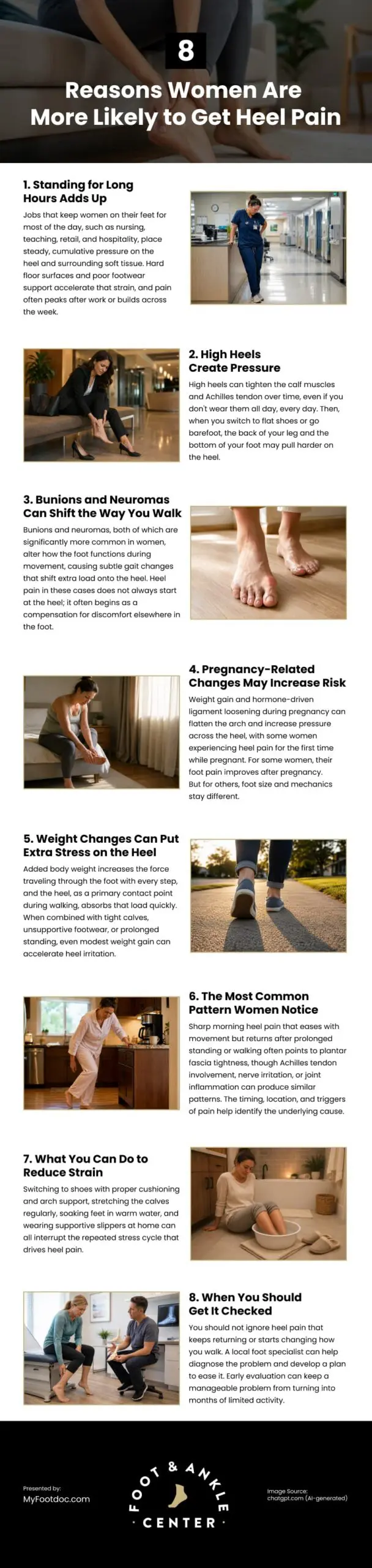
Infographic
Heel pain is significantly more prevalent in women than in men, and the reasons behind this gap extend well beyond footwear choices. Discover seven reasons women are more likely to get heel pain in this infographic.
Sources:
1https://www.health.harvard.edu/bunions-and-bunionettes-overview