
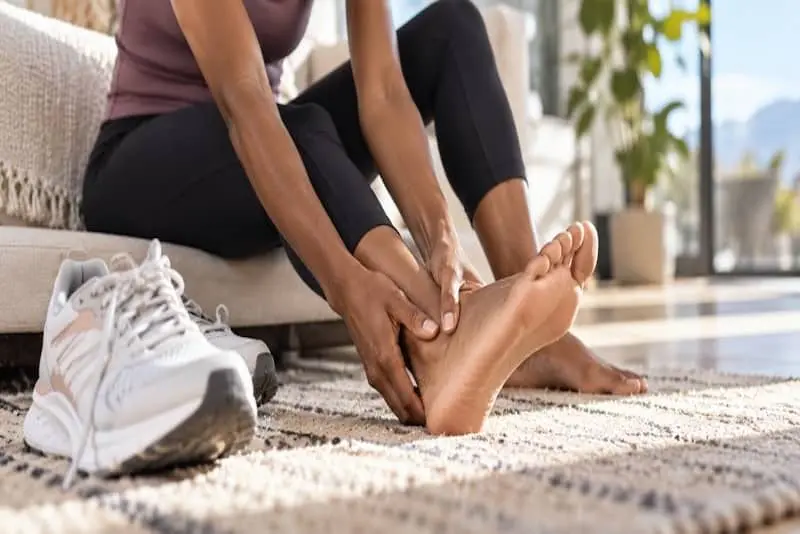
At the end of a long day, there’s nothing quite like that feeling of taking off your shoes and stretching out your toes and brushing off any pesky foot and ankle pain, like a little soreness in your arch. Perhaps, you chalk it up to all the time you spent on your feet that day or how far you’ve walked. Maybe it could be your shoes. Whatever the cause, you choose to wait it out and hope the pain fades.
The problem is that arch pain is usually caused by something. Your foot may be signaling strain in the plantar fascia, the band of tissue that runs along the sole of your foot, or in the tendons and ligaments that support your arch.
Ignoring that warning signal will not make it disappear. Instead, it’ll give any problems more time to grow.
What Your Arch Pain Is Telling You
Your arch works all day, even when you barely notice it.
With every step, the tendons, ligaments, and plantar fascia absorb impact to maintain your arch’s natural shape. A long run, a new pair of shoes, or hours spent standing on a hard floor place additional stress on that tissue. Soreness in your arch is often the result and often means the tissue has become inflamed or is carrying more tension than it can comfortably handle.
General foot fatigue usually improves after a short break. Pain from overstrained tissue tends to return as soon as you get back on your feet. That difference can help you tell the two apart. Catch the signal early, and you give the tissue a better chance to recover before the strain becomes something more painful and problematic.
Common Triggers Behind Arch Pain
Overuse
When your activity ramps up faster than your feet can keep up with, it can cause arch pain. Anything from a sudden jump in running mileage to a new job that keeps you on your feet all day to getting back into sports after some time off can put more demand on your arch.
Foot Structure
Flat feet and high arches both change how your weight spreads across the bottom of your foot, which can put extra strain on the plantar fascia in ways a neutral arch does not. Worn-out shoes or shoes with little arch support can make things worse by giving your foot less help absorbing that impact in the first place.
Training Surface
A treadmill absorbs shock differently than pavement, and a soft trail absorbs it differently than a hard gym floor. If your feet have adapted to one type of surface, suddenly switching to a harder one can place more stress on tissues that aren’t used to handling that level of impact. Giving your body time to adjust can help reduce that added strain.
Pushing Through Arch Pain Can Make It Worse
Inflamed tissue needs to rest to heal. And that will not happen if you keep up the same level of activity on a sore arch. If the same movements that caused the strain keep recurring, the inflammation and pain may as well.
Over time, that ongoing stress can start damaging the tissue itself. Small tears in the plantar fascia or tiny areas of damage in the surrounding tendons take longer to heal when you keep reinjuring them before the previous damage has a chance to recover.
Swelling and warmth around the arch can be early signs that this cycle has already begun. What started as a mild ache after activity can eventually turn into pain that shows up with every step you take, regardless of how much you did that day or which shoes you are wearing.
The Ripple Effect on Your Ankles, Knees, and Back
Most people naturally shift their weight away from a sore spot without thinking, which changes how their foot hits the ground and how their weight moves through each step.
That small adjustment can change your ankle alignment, and your ankle position can affect your knee, hip, and lower back. When your foot compensates for arch pain, it can send uneven stress up your entire leg.
Your calf and Achilles tendon may tighten as your push-off changes, your knee may move differently with each stride, and your lower back can become stiff after carrying your weight unevenly for hours. None of these areas caused the original problem, but they can all end up changing as a result.
This chain reaction can be easy to overlook because the new ache appears somewhere else. You might treat a sore knee or a tight lower back as a separate problem without realizing that the foot pain started the compensation in the first place.
When Arch Soreness Turns Into a Chronic Problem
Plantar fasciitis, or inflammation of the plantar fascia, is one of the most common problems that can develop when you leave arch pain untreated. Soreness after activity can gradually turn into pain with your very first steps in the morning. That morning stiffness often signals that the tissue has gone from mild irritation to a more persistent, chronic problem.
Tendon dysfunction can follow a similar pattern. The tendons that support your arch can handle repeated stress for years, but ongoing strain without enough recovery can weaken them faster than they can rebuild. Chronic cases often involve thickened, scarred tissue that does not respond as quickly to rest and stretching alone.
Some people also develop a heel spur, a small buildup of calcium where the plantar fascia attaches to the heel bone, after months of continued tension in the area.
Once the tissue reaches that point, recovery usually takes longer and requires more structured treatment than it would have if you had sought treatment at the first sign of soreness.
Simple Ways to Support Your Arches Early
Supportive Footwear
Shoes with good arch support and cushioning reduce the stress your plantar fascia and tendons absorb with every step, while regularly replacing worn-out shoes helps maintain that support.
The thought of supportive shoes might fill your mind with nightmare images of clunky old-fashioned designs, but many brands blend hidden orthopedic features with smart styling and modern silhouettes. You may be pleasantly surprised by what is available when you start to look.
Proper Stretching
Adding some simple stretches to your routine can also make a big difference. Stretch your calves and the bottom of your feet to keep the surrounding tissue flexible. This takes some of the tension off your arch during everyday movement. You can also gently roll your arch over a tennis ball or frozen water bottle. This can ease soreness and help increase blood flow to the area.
Rest
Give your arch a day or two of lower-impact activity when soreness first appears, rather than waiting until the pain forces you to stop completely. Ice your arch for 10 to 15 minutes after activity to help reduce inflammation.
Orthotics
Orthotics can also address foot mechanics that place extra strain on the arch. By providing additional support and distributing pressure more evenly, they can reduce stress on the foot during activity.
When to Consider Arch Pain Treatment
Home care often works well for mild soreness. If pain lasts more than a week or two, gets worse with activity, or changes the way you walk, consider professional arch pain treatment.
A podiatrist can identify which tissues are under strain, often using a gait assessment, X-ray, or other digital imaging to detect issues that home care cannot reveal.
Treatment usually starts with a conservative approach. Custom orthotics, targeted stretching, and physical therapy often come first, with more involved options considered only when needed. The right treatment depends on what is causing the pain and how your foot responds to those initial steps.
Don’t Ignore Persistent Arch Pain
Arch pain does not always mean you’ve suffered a serious injury, but it is worth paying attention to, especially when it persists or keeps coming back. Addressing the cause early can help prevent a minor problem from affecting the way you move and putting additional stress on other parts of your body.
Whether the solution is changing your footwear, adjusting your activity, adding support, or getting professional treatment, the goal is to give your feet what they need to recover and keep doing their job. If your arch pain is not improving, don’t wait for it to become the problem that stops you from doing the things you enjoy.