
You probably don’t give much thought to your toenails until one of them starts acting up like a grumpy neighbor. Tenderness, redness, and swelling next to your toenail can all be signs that the edge of the nail is curling back into the surrounding skin. The big toe is the most common culprit, and at first you may only notice a bit of pressure or redness. But without proper care, that tiny twinge can snowball into a full-blown foot fiasco.
The causes are usually simple. Maybe you trimmed your nails too short or curved the edges. Maybe your shoes are too tight, giving your toes less wiggle room than a packed elevator. Even repeated trauma, like stubbing your toe or playing sports in poorly fitted footwear, can increase your risk. And if you have naturally curved toenails or a family history of this issue, you’re even more prone to experiencing it.
It might seem harmless at first, but if you continue walking on it, letting the nail dig deeper into your skin, you could be walking your way into an infection you didn’t order. That’s why it’s smart to catch it early and why your local foot and ankle clinic can help nip the problem in the bud before it gets out of hand… or foot.
Why Waiting It Out Can Lead to Bigger Problems
You may be tempted to ignore the problem, especially if the pain seems manageable. But ingrown toenails rarely resolve on their own, and the longer you wait, the worse things can get. What starts as a simple case of pressure against the skin can snowball into swelling and soreness.
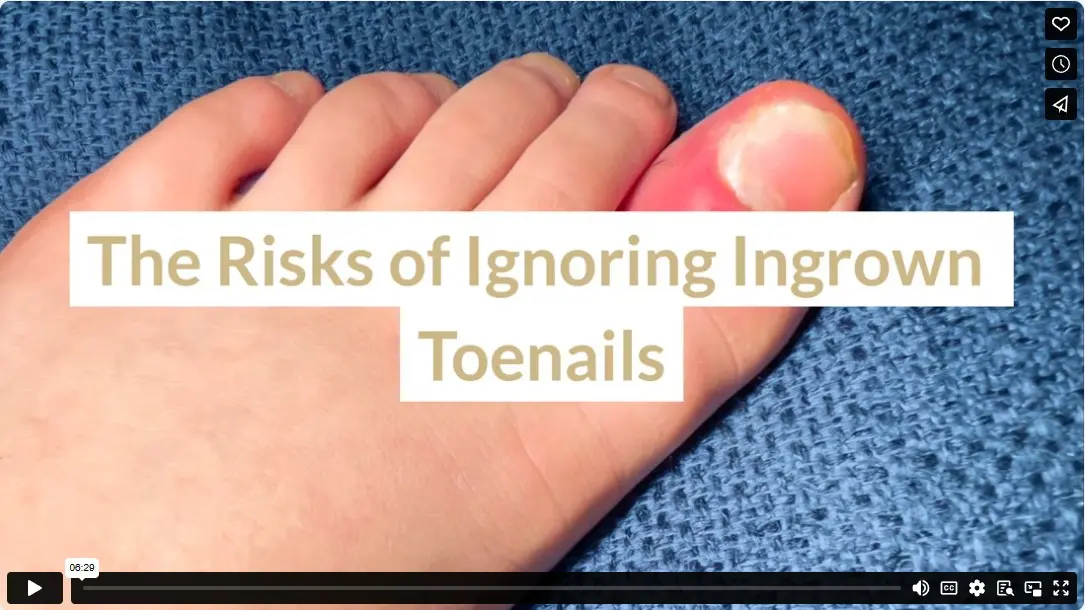
When the skin breaks and bacteria enter, infection sets in. That might mean pus, increased redness, warmth, and even a foul smell. Yes, your toe can start sending out stink signals.
If you continue delaying treatment, the infection can spread deeper into the toe—or worse, into the bone. At this point, simple home remedies won’t be enough, and you may face procedures like partial nail removal or antibiotics to treat a worsening condition.
Now imagine dealing with all that just because you didn’t want to take a break from your running schedule or thought you could “tough it out” a little longer. Trying to out-stubborn your toe rarely ends well. The risks increase the longer you delay care, and what could have been a quick toe doctor visit becomes a more involved recovery with extra downtime and fewer happy footsteps.
How Chronic Ingrown Toenails Affect Your Daily Life
Even if you don’t develop an infection, ignoring a recurring ingrown toenail can take a toll on your comfort and lifestyle. The constant ache when you walk, run, or wear specific shoes becomes a daily nuisance. It’s like having a nagging pebble in your shoe that you can’t shake. You may start compensating for the pain by changing how you walk, which can throw off your alignment and lead to problems in your knees, hips, or back over time.
You might also start avoiding activities you once enjoyed. Maybe you used to take long walks, hit the gym regularly, or enjoy dancing on the weekends. Now, you’re skipping workouts, avoiding outings, or choosing comfort over activity because that one toe calls the shots like a tiny tyrant. It sounds extreme, but pain, especially in the feet, affects mobility, mood, and motivation.
And let’s not forget the social aspect. If your toe looks red, swollen, or infected, you might feel self-conscious about wearing open-toed shoes or being barefoot in public. That small but persistent problem shapes how you dress, where you go, and what you do. Who knew one rebellious toenail could crash your summer sandal season?
The Risks for People with Diabetes and Circulatory Issues
If you have diabetes or poor circulation, the risks of ignoring ingrown toenails go way up. Nerve damage can dull pain signals, so you might not notice the problem until an infection is underway.
Even minor wounds heal slowly with diabetes. An infected toenail can lead to ulcers or worse, gangrene and even amputation if left untreated. That’s not a scare tactic. It’s a serious medical risk.
Daily foot checks and careful nail trimming are a must. What’s minor for others can become a major complication when circulation is poor. In this case, a little prevention really is worth a pound of cure.
Home Care vs. Professional Treatment
You can manage some mild ingrown toenails at home, especially in the early stages. Soaking your foot in warm water with Epsom salts a few times daily can reduce swelling and soften the skin. Wearing open-toed shoes or just giving your sneakers a break can relieve pressure. Applying antibiotic ointment might keep things from getting worse.
However, these home remedies have their limits. If the pain persists for more than a few days, if you see signs of infection, or if the problem keeps coming back, it’s time to wave the white flag and call in the pros. A podiatrist can carefully trim the nail edge, prescribe antibiotics if needed, and provide solutions that address the root cause, whether improper nail care, tight footwear, or anatomical issues are to blame.
In more severe or chronic cases, a podiatrist may recommend partial or total nail removal. It sounds intense, but it’s a quick, in-office fix that beats limping through life. It can put an end to years of recurring pain and frustration.
Preventing Future Problems Starts with Smart Habits
Once you’ve dealt with an ingrown toenail, you’ll likely want to avoid ever going through it again. Prevention is key, starting with a few toe-smart tweaks to your daily routine. First, trim your toenails straight across—never rounded—and don’t cut them too short. Think of it as giving your nails a flat top, not a curved cliff.
Wear shoes that provide enough room in the toe box for your toes to lie flat without pressure. If your shoes are squeezing like sausage casings, it’s time to size up. Avoid high heels or pointy dress shoes if you’re prone to toe crowding.
Keep your feet clean and dry, especially if you’re active or prone to sweaty feet. Fungi and bacteria thrive in moist environments, so managing moisture helps stop unwanted guests from moving in.
And most importantly, don’t ignore the early signs next time. A slight redness, pressure, or swelling is your body’s way of saying something’s wrong. Listen to it. Treat your feet like the messengers they are. Ignore them, and the message only gets louder.
Getting Help Sooner Makes All the Difference
Don’t wait for a small toenail problem to become a big pain. The sooner you act, the quicker and easier the fix.
Expert podiatrists offer safe, effective care for painful toenail issues. Whether it’s a quick procedure or tips for better foot hygiene, you’ll get the help you need to stay comfortable and on your feet.
Your feet deserve attention, even for things that seem minor. When you address problems like ingrown toenails early, you protect more than just your toes. You preserve your mobility and independence, too. Let your feet work for you, not against you.
Video
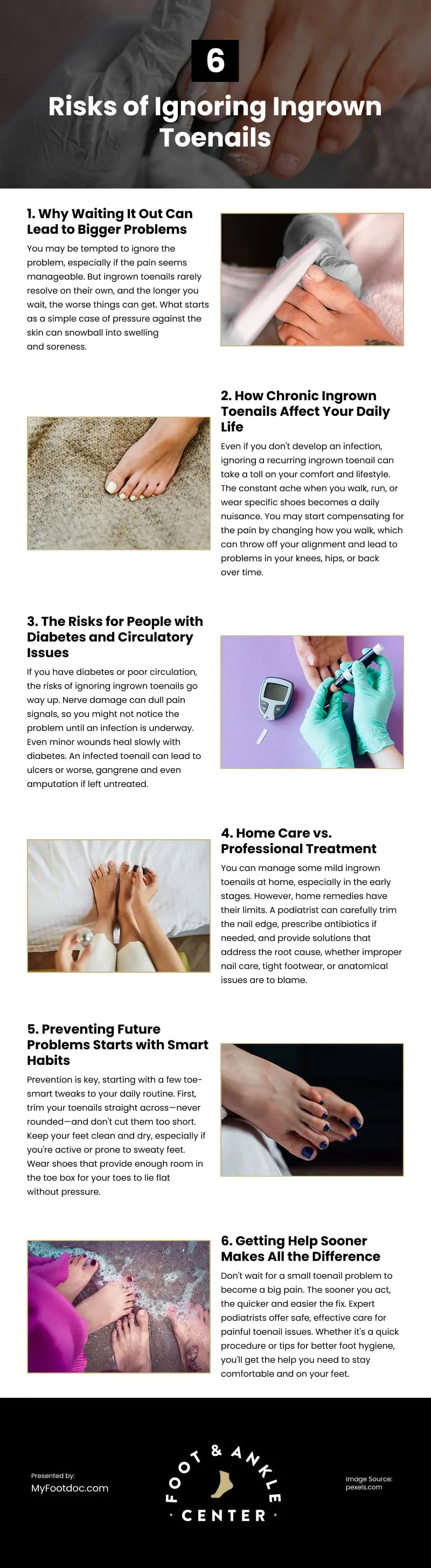
Infographic
Ingrown toenails may initially appear to be a minor problem, but they can quickly develop into a painful and potentially serious condition if not treated. This infographic highlights six risks associated with ignoring ingrown toenails.